Table of Contents
I have structured this guide to allow readers to bypass the cosmological context and jump straight to the prayer prompt if they are in immediate need of spiritual grounding. Keep these headings clear and contemplative as you move between Scripture, reflection, cosmology, practice, discernment, and prayer.
- Scripture and Opening Orientation
- A Short Reflection: Gaia as Neighbor, Not Object
- Planet Earth in Divine Cosmology
- The Language of Planetary Healing
- Ascension Hope, Grounded Care
- Discernment, Scope, and Archival Limits
- Prayer and Meditation Prompt for Gaia
Scripture and Opening Orientation
"The earth is the Lord's, and the fulness thereof; the world, and they that dwell therein." (Psalm 24:1)
This ancient verse establishes a shared baseline of planetary stewardship. It bridges traditional Judeo-Christian reverence with the expansive concepts of Gaia found in modern spiritual texts. We begin here to anchor our exploration in a familiar truth: creation is beloved, responsive, and spiritually meaningful. The ground we walk upon is not an accident of physics, but a deliberate expression of divine will.
When we approach the ascension teachings associated with Kathryn E. May, PsyD, we do so devotionally rather than as scientific proof claims. The language of Gaia and Planet Earth serves as a vocabulary for perceiving our world not as a static backdrop, but as a living participant in divine unfolding. This orientation invites us to read channeled cosmology with a softened heart. It asks us to suspend our modern, mechanistic view of nature and return to a deeply incarnational reality where spirit and matter are intimately entwined.
A Short Reflection: Gaia as Neighbor, Not Object
To call the Earth "Gaia" is to invoke a name of relationship. The planet is not merely scenery. It is not a resource repository waiting to be extracted, nor is it simply a temporary stage for human drama. Earth is a living context in which souls learn tenderness.
When we structure our spiritual reflection to move from macro-cosmic observation down to micro-sensory experiences—such as listening to soil and feeling wind, the ascension narrative avoids feeling disembodied. You might begin by contemplating the vastness of the atmosphere, but true devotion requires bringing that awareness down to the dirt beneath your feet. It requires kneeling in the garden. It asks you to feel the breeze against your skin and recognize it as the breath of a living system.
Your daily spiritual life connects directly to planetary healing through these small, grounded moments. Gratitude for clean water is a spiritual act. Repentance for our collective carelessness is a necessary confession. Blessing the ground we walk upon transforms a mundane commute into a pilgrimage of awareness.
Critical Insight: Restraint is a profound form of devotion. Choosing not to consume, not to rush, and not to dominate allows the living world space to breathe.
Consider how often we treat our environment as an object to be managed or a problem to be solved. A devotional posture shifts this dynamic entirely. We begin to see Gaia as a neighbor. Just as we are called to love our human neighbors, we are called to extend that same compassionate attention to the ecosystems that sustain us. This shift in perspective changes how we pray. It changes how we walk. It roots our highest spiritual aspirations in the very real, very physical world we inhabit, demanding that our theology become somatic and lived.
Planet Earth in Divine Cosmology
The whoneedslight archive categorizes a wealth of material under Divine Cosmology & Universal Law. This framework presents Earth as a rigorous classroom for consciousness, mercy, and transformation. When organizing these texts, I initially considered arranging the Dr. Kathryn E. May archive references chronologically by transmission date. However, a thematic grouping around Divine Cosmology better serves the reader's spiritual integration, allowing the core theological principles to surface above the timeline of their reception.
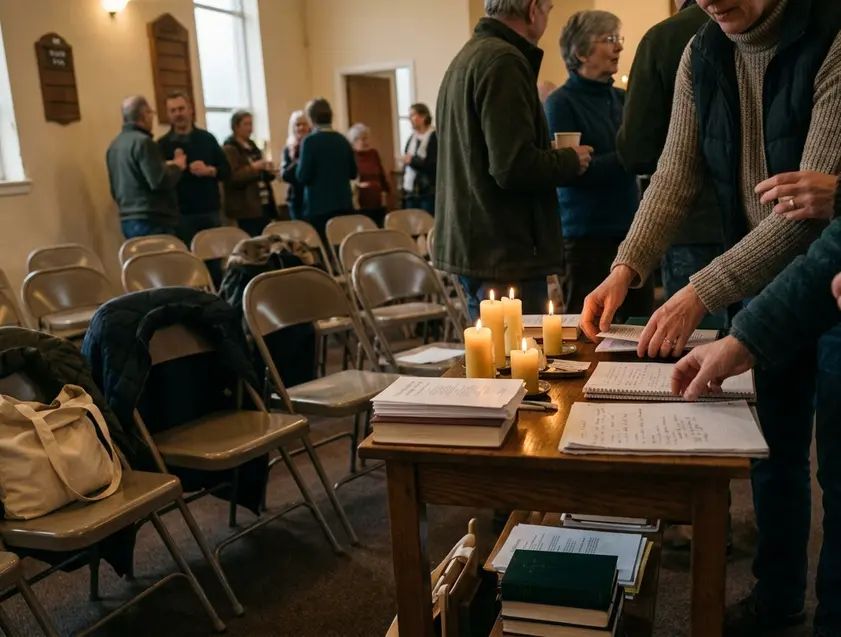
Reviewing archival transcripts spanning roughly 2013 through 2015 reveals consistent patterns of instruction. The texts frequently organize around groupings of three to five core universal laws. These laws act as a curriculum for the soul, emphasizing that our presence on this planet is purposeful. They situate Gaia language beside Sananda/Jesus messages, archangelic guidance, and Galactic Federation disclosure themes.
We must hold these themes carefully. They are not universally accepted doctrine, nor should they be overstated as such. In this devotional reading, cosmology is never used for speculation alone. It becomes a direct call to humility, compassion, and spiritual maturity. The vastness of the cosmos, as described in these archives, should make us more attentive to the fragile beauty of our immediate surroundings, not less. When we understand Earth as a specialized environment designed for the mastery of love, our daily interactions with nature take on a profound, eternal weight.
The Language of Planetary Healing
Planetary healing requires a specific devotional vocabulary made of blessing, confession, energetic alignment, and practical tenderness. We can categorize this vocabulary into three distinct postures—prayer, ascension, and stewardship. This categorization helps readers transition from passive reading into active, daily habit formation.
Prayer language softens the heart. It is the vocabulary of petition and gratitude, acknowledging our dependence on the Divine and the Earth. It is the quiet whisper of thanks before a meal or the silent plea for rain during a drought. Ascension language widens our identity. It invites us to see ourselves as cosmic citizens participating in a grander spiritual evolution, lifting our gaze above immediate anxieties. Stewardship language grounds our love in conduct. It translates high ideals into tangible actions, such as tending a garden, reducing waste, or advocating for clean waterways.
Recommendation: Group feedback indicates that integrating these postures requires physical practice. Commit to a daily silent walk outdoors of about ten to fifteen minutes. During this time, utilize one daily Earth-honoring phrase repeated over a week-long cycle. This simple rhythm bridges the gap between esoteric cosmology and embodied care, turning abstract theology into a lived liturgy.
Ascension Hope, Grounded Care
Ascension is fundamentally a hope for transfiguration rather than an abandonment of Earth. A persistent challenge within certain lightworker communities is the temptation to use spiritual disclosure narratives to bypass grief, responsibility, or ordinary kindness. The desire to transcend the density of this world can sometimes mask a refusal to engage with its suffering.
Risk Factor: Using ascension narratives to justify ecological neglect is a profound misreading of the teachings. The belief that the planet will simply be "rescued" by higher dimensional forces, or that physical reality is an illusion to be discarded, strips the spiritual journey of its necessary friction and growth.
Planetary healing is both inward and outward. A cleansed intention must eventually become more patient speech. It must lead to simpler consumption. It demands more compassionate attention to the suffering of both human and non-human life. We do not ascend by escaping the Earth; we ascend by learning to love it perfectly. True spiritual elevation increases our capacity to bear the weight of the world's pain without losing our anchor in divine hope.
Discernment, Scope, and Archival Limits
Because this article draws on multiple authority signals—Scripture, devotional practice, and a specific channeled-teaching archive, we must establish clear boundaries for interpretation. Channeled cosmology is received differently by different readers. Reader feedback suggests that there are varying interpretations of Galactic Federation texts based on the reader's prior religious background. What reads as profound revelation to one may seem entirely foreign to another.
Therefore, these materials should always be approached with prayerful discernment. We explicitly separate spiritual resonance from empirical claims, ensuring the archive's channeled material is treated as theological text rather than literal scientific consensus. The value of these teachings lies in their ability to provoke deeper love, not in their capacity to map the physical universe.
This devotional framework is intended strictly for personal spiritual reflection and cannot be utilized as a substitute for peer-reviewed ecological science or geological data. The goal is not to prove a cosmological theory, but to cultivate a reverent heart capable of participating in the healing of our shared home.
Prayer and Meditation Prompt for Gaia
We conclude by physically anchoring the cosmic themes discussed above. Find a quiet space where you can sit comfortably and undisturbed.
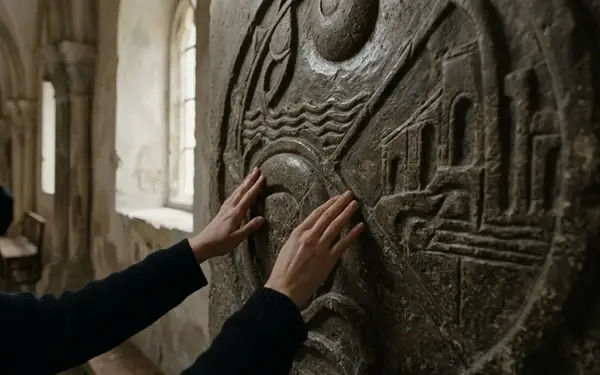
Place one hand over your heart. If possible, reach out and touch the ground with your other hand. This physical contact is essential for grounding the energy of your intention, moving the meditation from the mind into the body.
Take a few slow, deliberate breaths. With each exhale, release any tension or desire to escape your current reality. With each inhale, draw in the quiet strength of the earth beneath you. Feel the stability of the ground supporting your weight.
Pray these words softly:
Divine Source, Creator of all that is, I ask for a healed relationship with Planet Earth. Forgive my moments of carelessness. Open my eyes to the living presence of Gaia in the soil, the wind, and the water. Teach me the tenderness required to be a true steward of this classroom of consciousness. May I become less extractive, more grateful, and more available to love. Amen.